 by
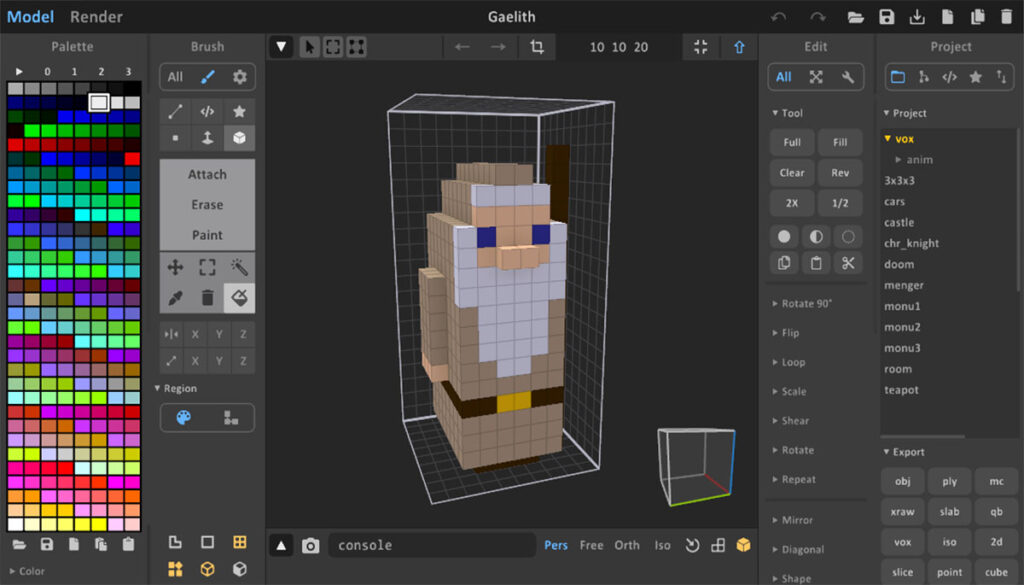
by In game development, one of the first steps is creating placeholder models, or “dummies,” to test the mechanics and bring the game to life during early stages. For Gäelith. The Voice of the Stones, I decided to create these models as voxel art using MagicaVoxel, a free and intuitive software that’s perfect for prototyping. Think of voxel art as digital building blocks, similar to what you’d see in Minecraft—but with much more customization.
The Models
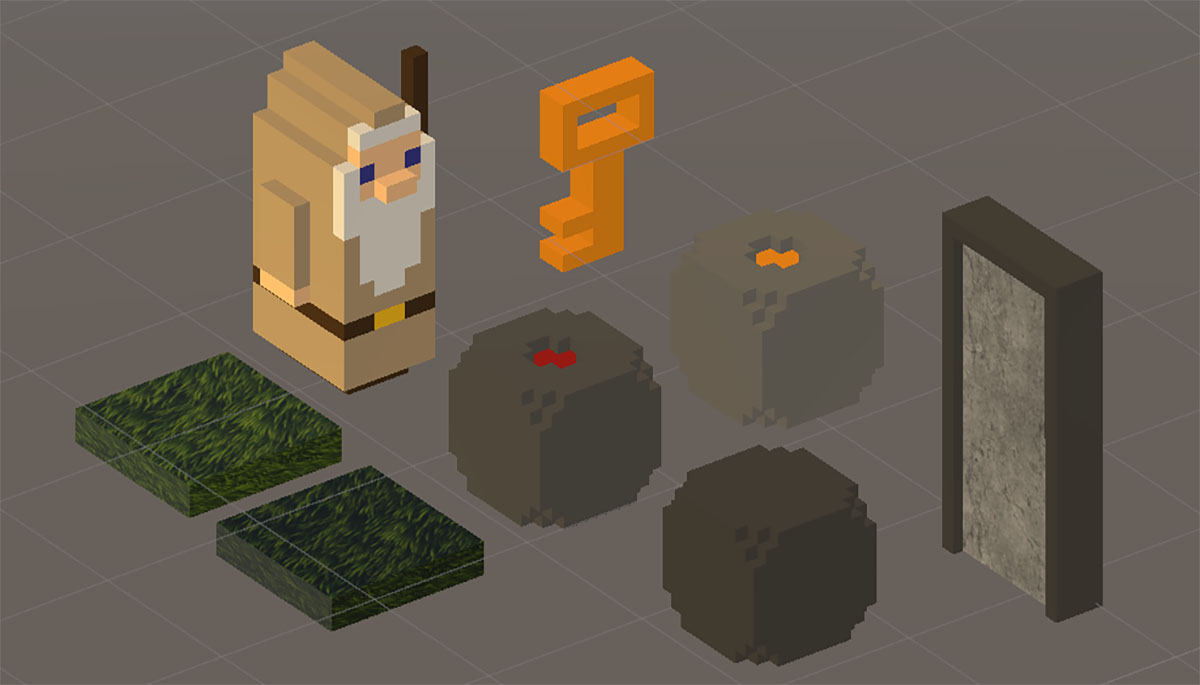
Here’s a breakdown of the models I’ve crafted so far:
- Gäelith Character: A simplified druid figure ready to traverse the ancient forest.
- Static Stone: Immovable obstacles in the game.
- Dynamic Stone: Stones that Gäelith can push around to solve puzzles.
- Special Stone: Key stones that, when aligned, unlock the portal key.
- Floor Tile: A grassy, tileable square forming the foundation of the game’s rooms.
- Portal Key: The objective of each room, which opens the portal.
- Portal Door: A two-part model consisting of a static frame and a dynamic door that opens once the key is obtained.
The Floor Tile and “Chess Board” Effect
In addition to needing a tileable texture, the floor tiles were a particularly interesting challenge. To enhance clarity for the player, I added a script that lets me toggle its appearance between two states: bright or dark. When combined, these tiles create a chessboard effect, helping players easily distinguish each individual tile and the positions of objects within the game world. This small detail improves visual organization without overwhelming the aesthetic simplicity of voxel art.
The Portal Door’s Two-Part Design
The portal door is a bit more complex. It’s made up of a static frame and a dynamic door. The static frame remains fixed, providing the structure, while the dynamic door will animate and open when Gäelith acquires the portal key. This separation allows for more flexibility in design and animation as I refine the mechanics.
Why Voxel Art?
Voxel art isn’t just charming and nostalgic—it’s incredibly efficient for prototyping. It lets me quickly iterate on designs while keeping the models light and easy to integrate into the game. As the development progresses, these placeholders might evolve into more detailed models, but for now, they serve their purpose beautifully.
But although I’m using MagicaVoxel to create placeholder models, it’s worth noting that this software is capable of producing models that are as complex as they are impressive. Voxel art is a whole world in itself, and there are countless artists creating true wonders in this medium. If you’re curious to see some amazing examples, check out the work uploaded at voxelmade.com.
From here, the real work begins as I integrate these models into Unity and start programming the game’s core mechanics. This includes setting up Gäelith’s movement, implementing the interactions between stones and tiles, and ensuring the portal door animations work seamlessly. Each step will bring the game closer to its vision, and I’ll continue refining these elements as I learn and experiment with Unity‘s vast capabilities. Stay tuned for more updates as Gäelith’s world starts to take shape!